Big box stores have bigger advertising budgets. Online retailers have huge inventories. Some can ship a sofa from a warehouse halfway across the country with a few clicks.
That doesn’t mean local furniture stores are losing.
It means your marketing needs to make your advantages obvious before a shopper decides where to buy.
For an independent furniture store in Little Rock, Central Arkansas, or any other local market, the opportunity is clear: compete on service, trust, convenience, and the experience of seeing the product in person. Then make sure your website, search presence, photos, reviews, ads, and tracking all support that message.
Here’s what matters in 2026.
Local Still Wins Where Furniture Matters Most
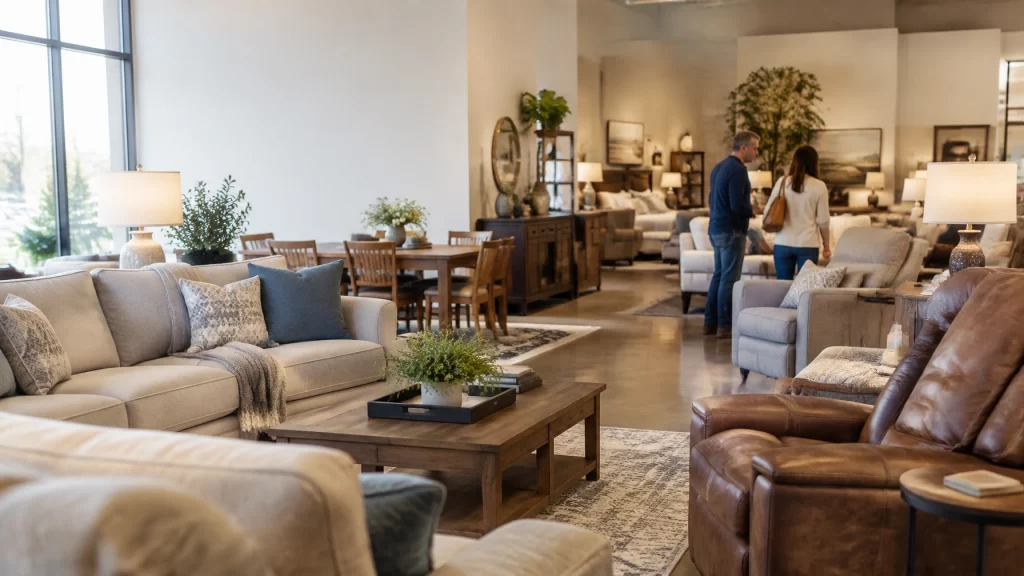
Furniture isn’t an impulse purchase for most people. Shoppers want to see it, touch it, sit in it, measure it, and imagine it in their homes.
That’s where your store has a real advantage.
You can offer:
- A chance to sit in the recliner before buying
- A chance to feel the fabric and inspect the finish
- Local delivery and setup
- Furniture they can take home this week
- Real people to call when something goes wrong
- Help choosing the right size, style, and configuration
A national retailer may offer endless options. An online marketplace may offer a lower price. But neither can always provide the same personal service as a trusted local showroom.
Your marketing should show that difference clearly. Don’t just promote products. Promote the buying experience.
A customer who sees your delivery crew, meets your sales team, and reads reviews from people in the area is more likely to believe that you’ll still be there after the sale.

A Slow Website Loses the Sale Before You Get Considered
Furniture shoppers compare. It’s common for someone to check three or four stores in one sitting before visiting a showroom.
That makes your website part of the sales floor.
If your site takes five seconds to load, looks like it was built in 2015, or makes shoppers work to find basic information, they may move on before they ever consider your furniture.
They’re looking for simple answers:
- What types of furniture do you carry?
- Are you open today?
- Where are you located?
- Do you offer delivery and setup?
- Can I see your current styles or collections?
- Do you have financing or special offers?
- How do I call or get directions?
Your site doesn’t need to be complicated. It needs to load quickly, work well on a phone, show your products clearly, and make the next step obvious.
That’s the goal of effective small business web design: remove friction between interest and action. A site should be easy for your team to update, too. New arrivals, seasonal promotions, hours, and delivery details shouldn’t require a long back-and-forth with a developer.
Better Product Photography Creates More Showroom Interest
A phone snapshot taken between cluttered shelves doesn’t help shoppers picture furniture in their home.
Neither does a single dark photo from across the showroom.
Furniture needs strong visuals because customers are evaluating comfort, scale, color, texture, and style before they visit. Every important product page should include real, well-lit photos.
Show the furniture from several useful angles:
- A clean product view
- A close-up of fabric, stitching, wood grain, or hardware
- A wider room-set image
- A side or rear view when it helps with placement
- A person using the product when scale or comfort matters
Room-set photography is especially valuable. A staged living room helps shoppers understand how a sectional works with a coffee table, rug, lamp, and accent chair. It gives them a starting point for their own home.
The goal isn’t to make every image look overly polished or artificial. It’s to give people enough visual information to feel confident taking the next step.
Use those same images across your website, Google Business Profile, social media, email, and ads. One good photo session can support your marketing for months.
Reviews Turn Local Interest Into Trust
A furniture purchase involves more than the product. Customers are also buying delivery, communication, service, and problem-solving.
That’s why reviews matter so much.
A shopper may forgive a product being temporarily out of stock. They’re less likely to forgive missed delivery windows, damaged furniture, poor communication, or a store that disappears after payment.
Your reviews should help answer the questions customers already have:
- Did the furniture arrive when promised?
- Was the delivery team careful?
- Did the store handle a problem fairly?
- Was the sales staff helpful without being pushy?
- Did the product look like it did online?
- Has the store been serving the community for years?
Ask customers for reviews after delivery or pickup, when the experience is still fresh. Make the process easy with a direct Google review link. Respond to positive and negative feedback in a calm, specific way.
Also highlight trust signals throughout your marketing:
- Years in business
- Local ownership
- Delivery and assembly services
- Warranty and return information
- Financing options
- Real team members
- Customer photos and testimonials
These details may not feel flashy. They help people choose you when two stores appear to offer similar furniture.
Show Up When People Search for a Furniture Store Nearby
Local search is one of the clearest paths to a showroom visit.
People search for phrases such as:
- “Furniture store near me”
- “Sofa store in Little Rock”
- “Sectional furniture near me”
- “Bedroom furniture store”
- “Furniture delivery near me”
Your Google Business Profile plays a major role in what they see next.
Keep your profile accurate and complete. Add current hours, your phone number, address, website, services, product categories, showroom photos, room-set images, and delivery information. Post updates when you receive new inventory or launch a sale.
Pay attention to the actions that indicate real buying intent:
- Calls
- Website clicks
- Direction requests
- Profile views
- Photo views
- Searches that show your business
Map visibility is useful, but it isn’t the final goal. The goal is getting more qualified people into the showroom or on the phone.
A strong full-service SEO plan connects your Google Business Profile with useful local pages on your website. It also helps search engines understand your categories, service area, products, and reputation.
Paid Ads Need More Than a Good Offer
Paid ads can put a sale, a new sectional collection, or a specific furniture category in front of local shoppers quickly.
But sending that traffic to a generic homepage wastes the click.
If your ad promotes living room furniture, the landing page should focus on living room furniture. It should show relevant images, explain the offer, include your location and hours, and make it easy to call, request information, or get directions.
The page should answer the question behind the click: “Why should I visit this store for this product?”
A focused landing page can include:
- The promoted collection or sale
- Clear product and room-set images
- Pricing or offer details
- Delivery information
- Financing details
- Reviews
- Store hours and location
- A call button and simple contact form
That’s a better path than making someone hunt through your navigation.
Effective PPC management for small business starts with the store’s goals, margins, inventory priorities, and sales process. We don’t recommend spending more simply because an ad received clicks.
We look at what the campaign is helping you generate.
Track the “We Saw It Online” Sale
Many furniture stores hear this every week:
“We saw it online, so we came in.”
That customer may have:
- Seen a Google ad
- Browsed your product pages
- Checked your reviews
- Called with a question
- Visited the showroom
- Bought at the register
If you only track online forms, you’ll miss most of that journey.
You need to connect online activity with showroom activity as closely as possible. That may include call tracking, form tracking, tagged campaign links, Google Business Profile metrics, direction clicks, offer codes, and a simple question at the register:
“How did you hear about us?”
No tracking system will capture every offline sale perfectly. But without proper tracking, you’re guessing. You may cut a campaign that creates showroom traffic or keep funding one that produces attention but no customers.
This is why we believe in strategy before spend. Start with your actual goals and numbers:
- How much is a new customer worth?
- Which categories need more attention?
- How many showroom visits turn into sales?
- What does a profitable sale look like?
- Which marketing channels produce calls, visits, and purchases?
Then build the plan around those answers.
One Partner Beats Five Disconnected Vendors
Your website, SEO, Google Business Profile, paid ads, photography, reviews, and reporting should support the same sales strategy.
When five vendors manage those pieces separately, important details get missed. The ad promotes a product that isn’t in stock. The website lists outdated hours. The SEO report celebrates rankings while calls decline. The social media team posts photos that never reach the product pages.
A small, hands-on team can keep the pieces connected.
As a full service digital marketing agency, we help local businesses launch, grow, and scale through one integrated digital marketing service. We build sites that last, set up tracking before increasing ad spend, and explain what’s working in plain English.
You can see examples of our recent work in the Digital Edge IQ portfolio, including marketing, websites, advertising, and reporting for Arkansas businesses.
If you want a practical starting point, request a Free Digital Snapshot. We’ll look at your current visibility, website experience, search presence, and conversion path.
Then you’ll know what needs attention first, without the busywork, vanity metrics, or marketing jargon.
When you’re ready, contact Digital Edge IQ and tell us what you’re trying to improve. We’ll start with the numbers that matter to your store.